Labelbox Alternative for Autonomous Vehicles
Purpose-built annotation for teams who need sensor fusion done right.
When your annotation platform was built for GenAI, autonomy becomes an afterthought. Kognic is purpose-built for sensor-fusion annotation—because safe autonomy demands specialized tools, not adapted ones.
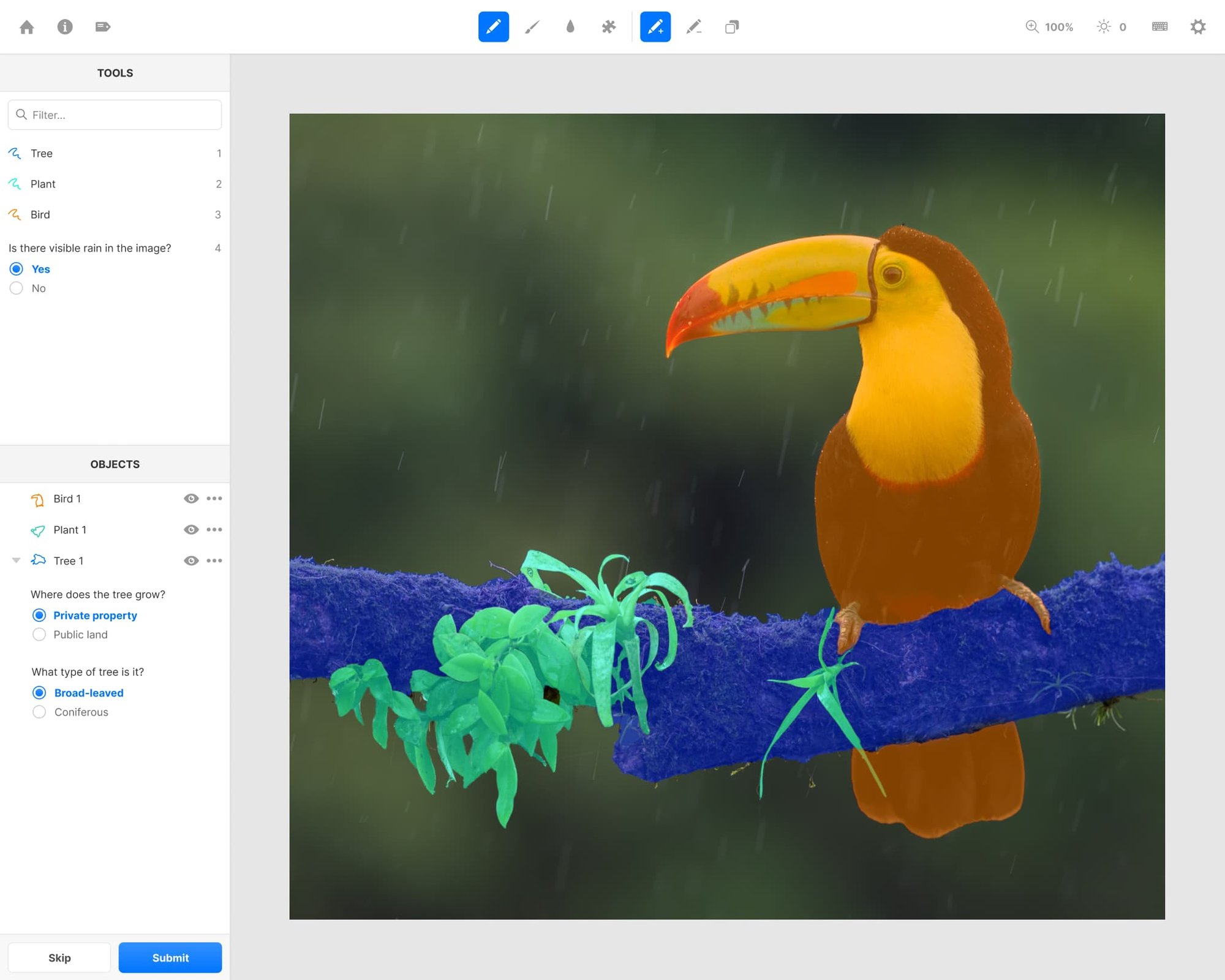
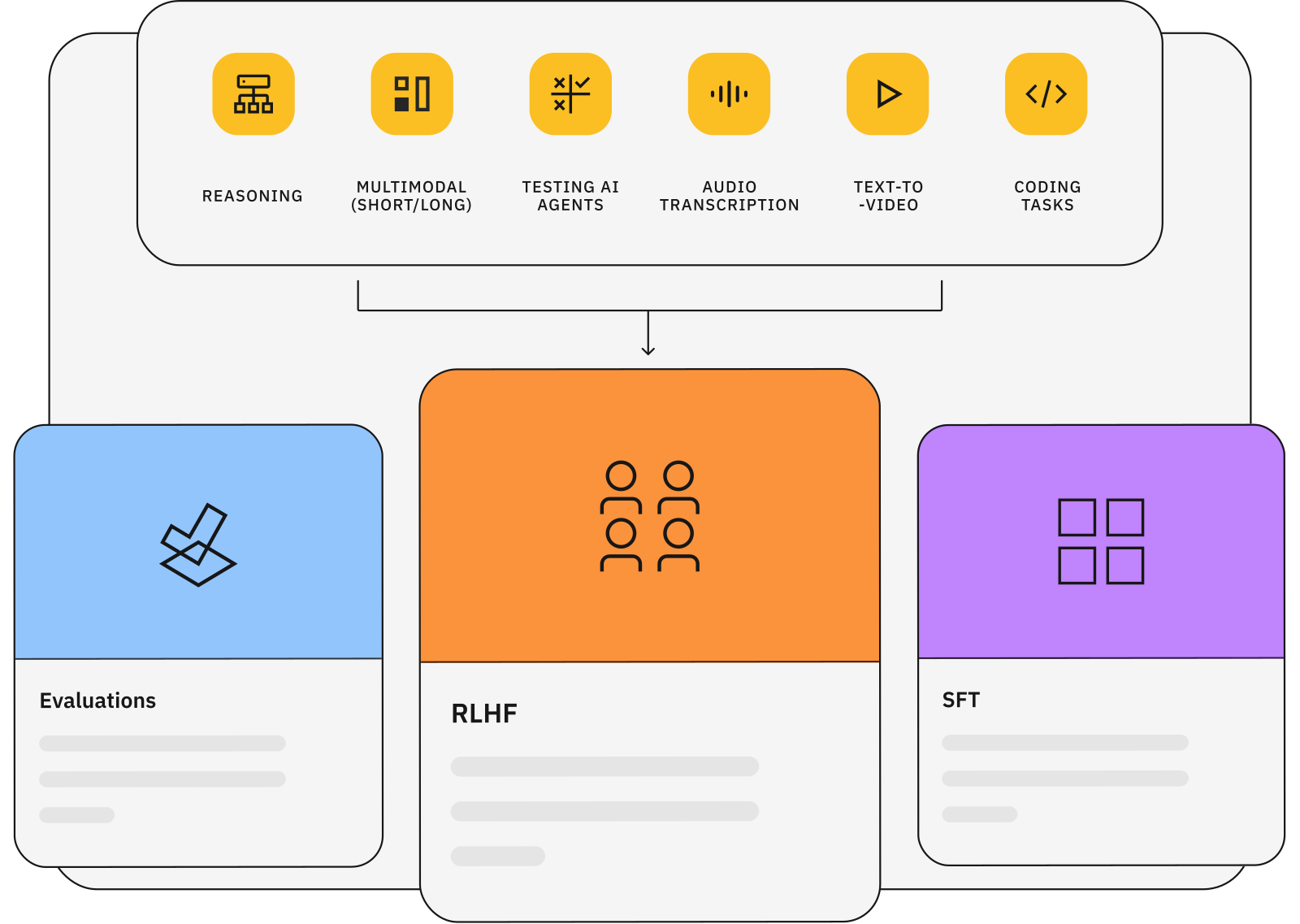
Labelbox has pivoted heavily toward generative AI—RLHF workflows, chat evaluation, and frontier model training. That's smart business, but it means their autonomy tooling is increasingly a side project.
When you're annotating sensor-fusion data, you need:
- Native 3D point cloud editing, not 2D tools with 3D bolted on
- Automatic cross-sensor projection from a single annotation
- Ego-motion compensation that understands vehicle dynamics
Labelbox's editor handles many data types adequately. Kognic's editor handles
sensor-fusion data exceptionally.
Pay Per Unit, Pay for Uncertainty
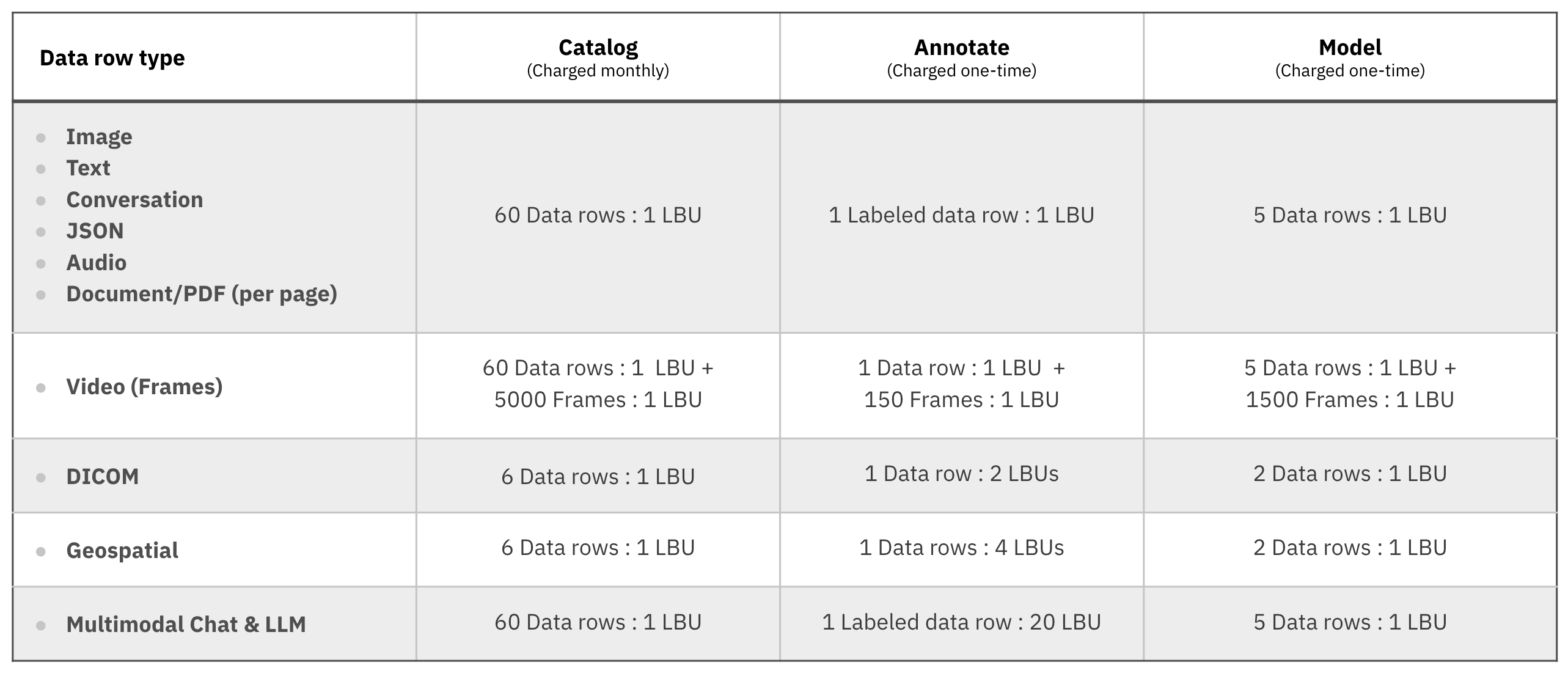
Labelbox charges by "Labelbox Units" (LBUs)—a proprietary metric that bundles storage and labeling costs. For complex autonomy projects with massive sensor payloads, this creates unpredictable budgets.
One LBU might equal 60 stored images or 1 labeled image. When you're processing fleet-scale LiDAR sequences with multiple cameras and radar returns, the math gets complicated fast.
Kognic provides transparent, project-based pricing. You know the cost before you start—not after your LBU meter runs out.
AI Trainers vs. Dataset Engineers
Labelbox offers "Alignerr"—a network of AI trainers skilled in tasks like RLHF preference ranking and prompt evaluation. That's valuable for LLM fine-tuning.
But autonomy annotation requires different expertise:
-
Understanding occlusion patterns in urban driving scenarios
-
Recognizing edge cases that matter for safety validation
-
Knowing when a partially visible pedestrian is "about to step into traffic"
Kognic's annotation partners specialize in autonomous vehicles. They're trained on ADAS/AD scenarios, not general AI tasks. The difference shows up in your model's performance on corner cases.
Built Different for a Reason
|
|
|
|---|---|---|
| Industry Focus | GenAI, LLMs, general computer vision | Autonomous vehicles, ADAS, robotics |
| Sensor Fusion | Manual multi-sensor configuration | Purpose-built: single annotation projects across LiDAR, camera, radar |
| Auto-Labeling | Model-assisted labeling (general purpose) | ML integration with 68% time reduction for autonomy data |
| Quality Assurance | Configurable QA workflows | 90+ automated checkers built for autonomy edge cases |
| Pricing Model | LBU consumption (variable costs) | Transparent project-based pricing |
| Workforce Expertise | General AI trainers (Alignerr) | Autonomy-specialized annotation partners |
| Best for | Teams training LLMs and GenAI | Teams building self-driving systems |

When Labelbox Makes Sense
Labelbox is expanding horizontally—more data types, more industries, more use
cases. Their roadmap prioritizes GenAI because that's where the market is moving.
Kognic is going deeper—better sensor-fusion tools, faster 3D workflows, smarter
automation for the specific challenges of autonomy data.
When annotation quality directly impacts vehicle safety, specialization isn't
a luxury. It's a requirement.
Frequently Asked Questions
Kognic is purpose-built for autonomous driving and ADAS annotation, with deep expertise in 3D/LiDAR, sensor fusion, and safety-critical workflows. Labelbox is a general-purpose data labeling platform that serves many industries — healthcare, retail, media, agriculture — and has pivoted heavily toward generative AI and LLM training. If you are building autonomous driving systems, Kognic offers the domain depth that generalist platforms cannot match. Explore Kognic's platform capabilities.
Kognic was built from day one for 3D sensor data. The platform provides native LiDAR annotation with one-click cuboid creation, smart interpolation, multi-LiDAR support, and automatic cross-sensor projection. Labelbox added 3D/LiDAR capabilities in mid-2025 — less than a year old — making it significantly less mature for production-scale 3D workflows. If LiDAR annotation is central to your program, Kognic has a multi-year head start.
Sensor fusion is a core architectural feature of Kognic — camera, LiDAR, and radar data are annotated together in synchronized, calibrated views within a single annotation session. In Labelbox, sensor fusion requires manual configuration and separate annotation passes that are then aligned. For teams working with multi-sensor autonomous driving data, Kognic's native fusion approach eliminates the cross-modal inconsistencies that degrade model training.
Labelbox uses a proprietary unit system called Labelbox Units (LBUs), which can make budgeting unpredictable — costs vary depending on data type, annotation complexity, and consumption patterns. Kognic provides transparent, project-based pricing tied to your specific annotation requirements. Contact us for a detailed quote based on your project scope.
Kognic includes over 90 automated checker apps specifically designed for autonomous driving edge cases — detecting issues like cuboids clipping through the ground plane, tracking ID switches, and label inconsistencies across frames. Labelbox offers configurable QA workflows, but they are general-purpose and require custom setup for automotive-specific quality rules. See how Zenseact maintains annotation quality at production scale with Kognic.
Labelbox is a strong choice if your primary use case is LLM training with RLHF, multimodal generative AI, or general computer vision across non-automotive industries. Its self-serve model and broad feature set work well for teams that need a flexible, multi-purpose labeling tool. For autonomous driving, ADAS, and robotics — where 3D accuracy, sensor fusion, and safety-critical quality matter — Kognic is the specialist choice. See how leading automotive customers use Kognic.
Yes. You can request a demo to see the platform with your specific sensor configuration and annotation requirements. Kognic's team will work with you to run a pilot on a representative sample of your data so you can evaluate quality, speed, and workflow fit before scaling up.