Multi-LiDAR Annotation: Handling Complex Sensor Setups
Modern autonomous trucks and robotics platforms run with three, five, sometimes eight LiDARs working at once. Each one sees the world differently. Annotating that picture at scale is where most teams hit a wall.
Multi-LiDAR annotation is the process of labeling 3D point cloud data captured from two or more LiDAR sensors operating on the same vehicle, where annotations must remain consistent across sensors, time, and overlapping fields of view.
Key Takeaways
- Multi-LiDAR setups generate 3 to 10 times more raw point cloud data per second than single-sensor configurations, and the annotation cost scales with how the data is handled, not just how much there is.
- Cross-sensor consistency, not labeling speed, is the metric that separates a useful multi-LiDAR dataset from a noisy one.
- Calibration-aware pipelines reduce duplicate and ghost annotations by 30 to 50 percent compared to per-sensor workflows.
- Long-range LiDAR introduces edge cases (sparse returns at 200m+, motion-induced distortion, weather artifacts) that need explicit annotation rules, not just better tooling.
- Teams running fleet-scale autonomous trucking or robotics typically need annotation platforms purpose-built for fused 3D point clouds, not generic 2D-first tools retrofitted with a 3D mode.
Why Multi-LiDAR Setups Break Single-Sensor Workflows
A single-LiDAR pipeline is a clean problem. One stream of points, one coordinate frame, one consistent density profile. Annotators see what the sensor sees, label what's there, and move on.
Add a second LiDAR. Now the same pedestrian appears in two point clouds with different densities, slightly different timestamps, and partial occlusion patterns that don't match. Add a third. Add a fourth covering the rear quadrant of a 53-foot trailer.
The annotation problem stops being about labeling and starts being about reconciliation. Which return belongs to which object? Is that cluster of points behind the truck a real obstacle or a reflection from the trailer chassis? Did the same vehicle get labeled three times because three sensors caught it from three angles?
This is why teams running 3+ LiDAR setups, common in autonomous trucking, mining robotics, and L4 passenger vehicles, find that the tools that worked at smaller sensor counts fall over once they scale. The labeling is the easy part. The consistency is the hard part.
What Does "Calibration-Aware" Mean for Annotation?
Multi-LiDAR data is only as good as its calibration. The extrinsic and intrinsic parameters that align each sensor to a common vehicle frame are what let you treat eight separate point clouds as one fused observation of the world.
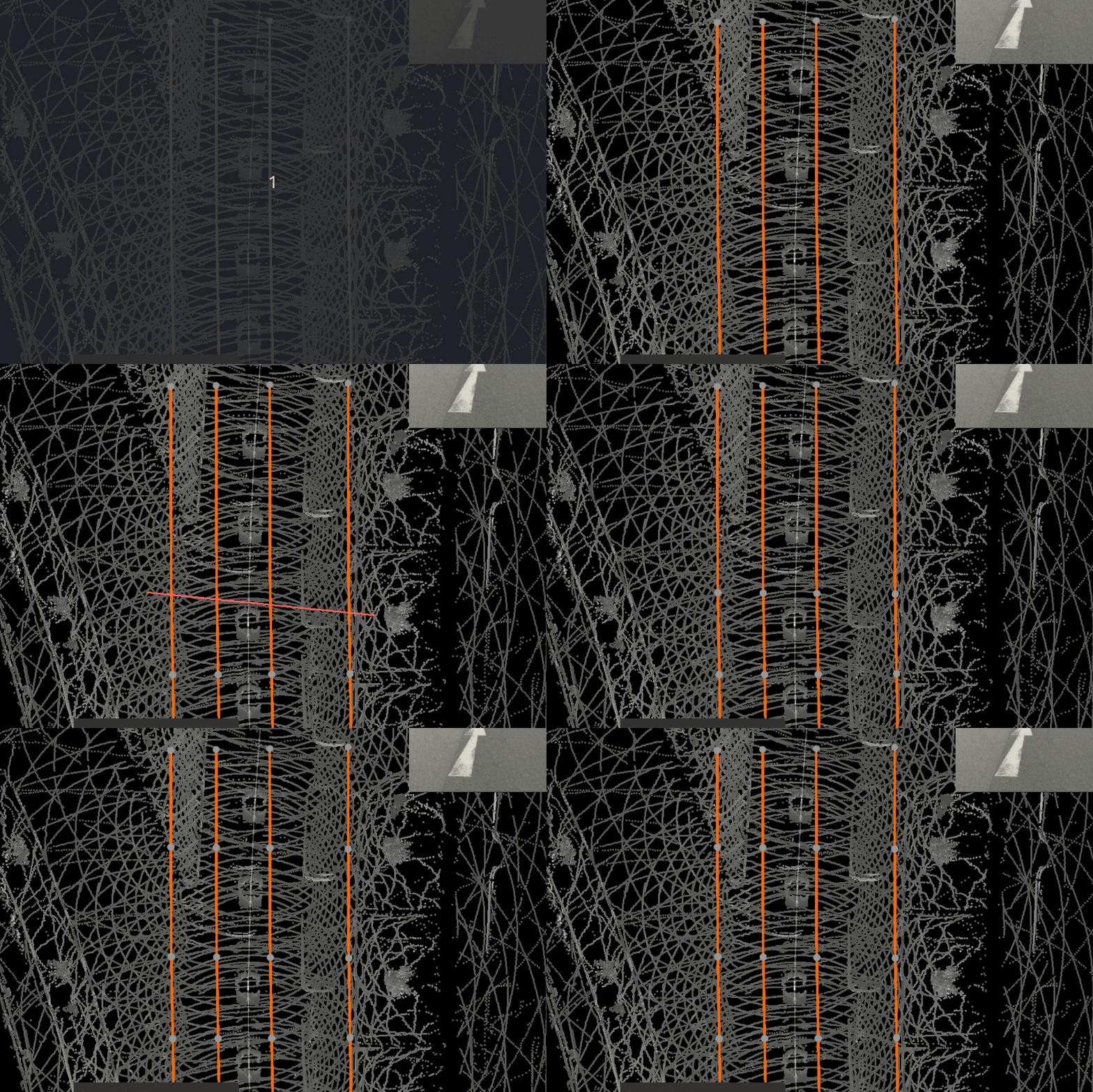
A calibration-aware annotation pipeline uses those parameters at every step. When an annotator draws a 3D box around a vehicle in the front-LiDAR frame, the box propagates to the side and rear LiDAR frames automatically, in the right pose, at the right time. The annotator validates rather than redraws.
Calibration-naive pipelines treat each sensor as an island. Annotators label the same object in each sensor's frame, often with slight inconsistencies that have to be cleaned up later. The cost shows up twice: in annotation hours and in downstream model performance.
This is one of the structural differences between annotation platforms purpose-built for multi-sensor autonomous driving and tools that started as 2D image annotation and added a 3D mode. The former assumes calibration is a first-class input. The latter treats it as an afterthought.
How Do You Maintain Cross-Sensor Consistency at Fleet Scale?
Three things have to be true for a multi-LiDAR dataset to be useful for training a perception model:
- An object labeled in one sensor's view is labeled identically in every other sensor's view that sees it. Same class, same instance ID, same dimensions.
- Temporal consistency is preserved. A vehicle tracked across a 5-second sequence keeps the same instance ID across all LiDAR frames at every timestamp.
- Sensor disagreements are resolved by rule, not preference. When the front LiDAR shows a clearer return than the side LiDAR, the annotation pipeline knows which to trust, and the annotator follows that policy consistently.
Getting all three right at the scale of a fleet (hundreds of trucks, terabytes per day) requires more than good annotators. It requires guidelines that encode these rules, tooling that surfaces inconsistencies before delivery, and a quality assurance loop that catches drift across batches.
Teams that try to handle this with general-purpose 3D bounding box tools end up rebuilding most of this infrastructure themselves. We've covered some of the edge cases that compound this problem in autonomous driving datasets (rare classes, partial occlusion, sensor failure) which all get worse at higher sensor counts.
What Makes Long-Range LiDAR Different to Annotate?
Long-range LiDAR (anything beyond about 150 meters) is now standard on autonomous trucks because braking distance and reaction time at highway speeds demand it. Annotating long-range returns introduces problems that don't exist at shorter ranges.
Sparse returns. A car at 200 meters might generate 10 to 20 LiDAR points. There's not enough geometry to draw a confident bounding box. Annotators need rules for what to label, what to flag as ambiguous, and what to exclude.
Motion-induced distortion. A truck at 90 km/h covers 25 meters per second. A spinning LiDAR's scan pattern smears across that motion. Without motion compensation, the annotated object position is off by meters. With it, the compensation itself becomes part of the annotation contract.
Weather and atmospheric artifacts. Rain, fog, and dust create false returns at long range that look almost like real objects. Annotators need pixel-level (point-level) policy for what to keep and what to discard.
These aren't problems any single tool solves. They're problems a calibration-aware pipeline plus explicit annotation guidelines plus quality-assured human review handles together. This is why long-haul trucking teams typically gravitate toward annotation services rather than software-only platforms.
How Do Robotics and Trucking Teams Choose an Annotation Platform for Multi-LiDAR Data?
Three questions tend to settle it.
Was the platform built for 3D point clouds, or was it retrofitted? A platform that started life as a 2D image annotation tool and added LiDAR support typically treats point clouds as a secondary citizen. You can see this in how it handles calibration, sensor fusion, and temporal sequences. Multi-LiDAR setups punish that lineage.
Does it handle multi-sensor consistency natively, or do you have to build it yourself? Some platforms expect you to label each sensor independently and reconcile later. Others fuse the sensors at ingestion and treat the multi-LiDAR observation as one labeling task. The second approach is the only one that scales past two or three sensors.
Is there a managed annotation workforce, or is it tooling only? At fleet scale, the labeling workforce becomes the bottleneck. Teams that need millions of frames per quarter find that software-only platforms shift the operational load onto them, while platforms with integrated annotation services absorb that complexity.
For teams running multi-LiDAR setups in trucking or robotics, Kognic's annotation platform was built around fused multi-sensor data from day one, with calibration-aware sensor fusion and a managed annotation workforce that operates on the same pipeline.
Multi-LiDAR Annotation Platform Capabilities: What to Look For
| Capability | Single-LiDAR sufficient | Multi-LiDAR (3+) required |
|---|---|---|
| Native 3D point cloud annotation | Yes | Yes |
| Sensor fusion at ingestion | No | Yes |
| Calibration-aware annotation propagation | Optional | Critical |
| Cross-sensor consistency QA | Optional | Critical |
| Long-range edge case policies | Sometimes | Always |
| Motion compensation handling | Sometimes | Always |
| Managed annotation workforce | Optional | Critical at fleet scale |
| Temporal sequence support | Sometimes | Critical |
| Multi-sensor instance tracking | No | Critical |
If a platform scores "yes" on the left column but "no" on the right, it's a single-sensor tool. That's fine for early prototypes. It will not scale to a production fleet.
What This Means for Production Datasets
The teams that get multi-LiDAR annotation right share three habits.
They invest in annotation guidelines as much as in tooling. Edge cases, sensor disagreements, and ambiguous returns get explicit rules, not annotator judgment.
They measure consistency, not just throughput. Time-per-frame is a useful metric. Inter-sensor disagreement rate is a more useful one.
They treat calibration as part of the data contract, not an external concern. When calibration drifts, annotation quality drifts with it. Detecting calibration regressions in the annotation pipeline catches problems weeks before they show up in model performance.
The teams that get it wrong tend to underinvest in all three and try to compensate with annotator volume. The math doesn't work past a few hundred thousand frames.
Frequently Asked Questions
What is the best LiDAR annotation platform?
The best LiDAR annotation platform depends on sensor count and operational scale. For single-LiDAR prototypes, general-purpose 3D annotation tools are sufficient. For multi-LiDAR production fleets in autonomous trucking, robotics, or L4 passenger vehicles, the practical choice narrows to platforms purpose-built for fused multi-sensor data with calibration-aware pipelines and a managed annotation workforce.
Best annotation for long-range LiDAR data in trucking?
Long-range LiDAR in trucking introduces sparse returns, motion-induced distortion, and weather artifacts that require explicit annotation policies, not just better tooling. The strongest fit is a platform that combines calibration-aware multi-sensor fusion, motion compensation handling at ingestion, and a managed annotation workforce trained on long-range edge cases. Software-only tools typically push that operational load back onto the customer.
How do robotics teams choose an annotation platform for LiDAR data?
Robotics teams typically evaluate three criteria: whether the platform was built for 3D point clouds from the start (rather than retrofitted from 2D), whether it handles multi-sensor consistency natively, and whether it offers a managed annotation workforce or is tooling-only. At fleet scale, the workforce question dominates, because labeling capacity becomes the bottleneck before any tool does.
How many LiDAR sensors does a typical autonomous truck use?
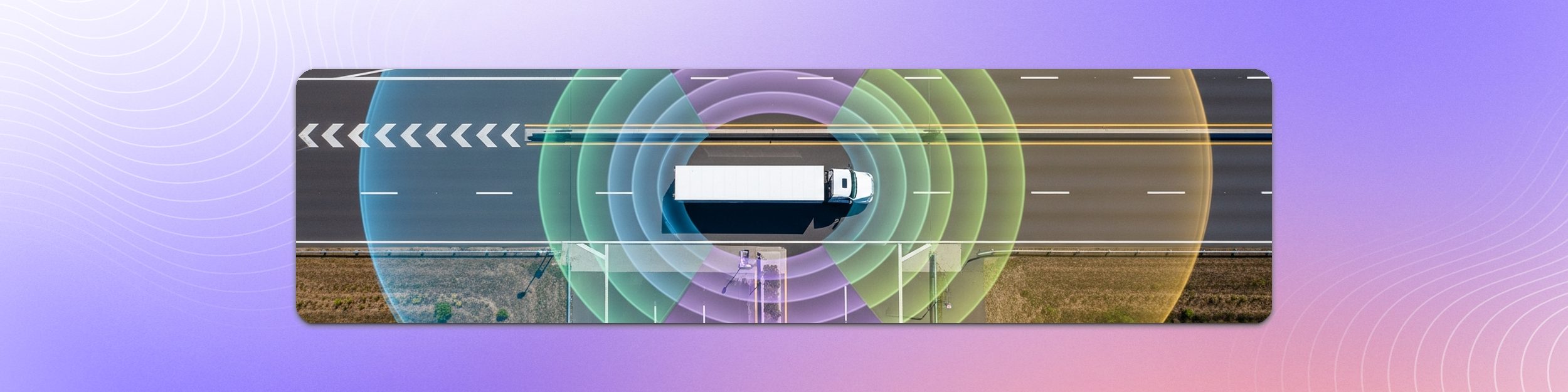
Autonomous trucking platforms typically run between three and eight LiDAR sensors, covering long-range forward perception, side and rear blind spots, and trailer monitoring. The exact count depends on the operational design domain, but anything below three creates blind spots that are hard to close with camera or radar alone.
What is sensor fusion annotation?
Sensor fusion annotation is the practice of labeling objects and events on data that has been combined from multiple sensors (typically LiDAR, camera, and radar) into a unified observation. Done well, it produces ground truth that reflects what the vehicle's perception system actually sees, rather than what any single sensor captured in isolation.
How is multi-LiDAR annotation priced compared to single-sensor?
Multi-LiDAR annotation pricing scales with how the platform handles the extra sensors. Calibration-naive pipelines tend to multiply the cost roughly with the sensor count, since each sensor is labeled independently. Calibration-aware pipelines that propagate annotations across sensors typically add 30 to 60 percent over single-LiDAR cost, not 200 to 700 percent, because the labeling work is shared across the fused observation.
What This Means in Practice
Multi-LiDAR is no longer the exception. For autonomous trucking, robotics, and L4 passenger vehicles, it's the default. The annotation infrastructure that worked at one or two sensors does not survive the jump to four, six, or eight.
Teams that recognize this early invest in calibration-aware annotation pipelines, explicit edge case policies, and either a managed workforce or a partner that brings one. Teams that don't tend to spend the next 18 months rebuilding what they could have started with.
Talk to us about how Kognic handles multi-LiDAR setups for autonomous trucking, robotics, and ADAS programs. Book a demo to see the platform in action with your own data.
Share this
Written by