Get the most annotated sensor-fusion data for your budget
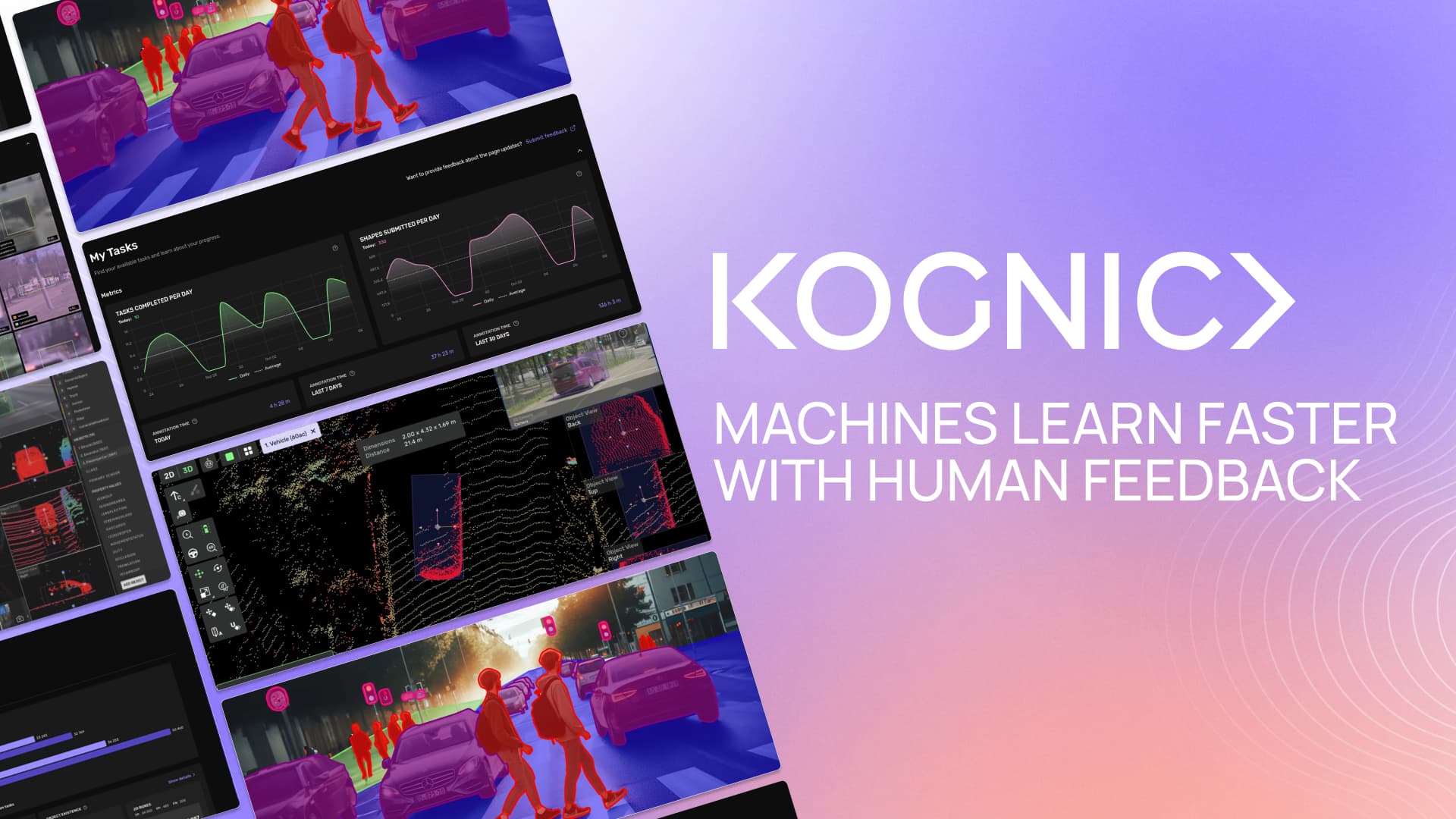
High-quality sensor fusion annotations are essential for training reliable autonomous driving models. Whether you're processing LIDAR data, camera feeds, or complex multi-sensor setups, annotation quality directly impacts your model's performance and ultimately your development costs. Kognic helps you maximize the value of every annotation dollar by combining productive AI-assisted tools with expert human feedback—delivering more annotated autonomy data per dollar than anyone else.
In autonomous driving development, annotation efficiency directly affects your time-to-market and bottom line. Traditional labeling methods create expensive bottlenecks that delay product launches and drain budgets. By integrating smart automation with precision human oversight, Kognic reduces your annotation costs while maintaining the quality standards your models demand. This cost efficiency means you can process larger datasets, iterate faster, and deploy safer systems—all within your budget constraints.
Our platform enhances annotation consistency by automatically detecting potential errors and flagging inconsistencies before they enter your dataset. This proactive quality control reduces expensive rework cycles and ensures your training data maintains high standards throughout the pipeline, maximizing your return on every annotation investment.
Here's a practical example of how Kognic's checker apps maintain data quality while boosting productivity. When annotating vehicle data, our automated validation catches common errors in real-time:
- Overlapping vehicle detection: The checker app prevents physically impossible annotations by flagging overlapping passenger car cuboids.
- Size validation: Warnings trigger for unrealistic measurements, like pedestrian annotations taller than 2.5 meters.
- Relationship verification: When annotating scenarios like pedestrians riding bikes, the checker ensures proper linkage throughout the sequence.
These automated checks provide immediate feedback to annotators, enabling corrections before submission. This approach significantly reduces costly post-delivery corrections and helps you get the most annotated autonomy data for your budget—combining human judgment with smart automation to maximize both quality and cost efficiency.
Share this
Written by